Skip to content
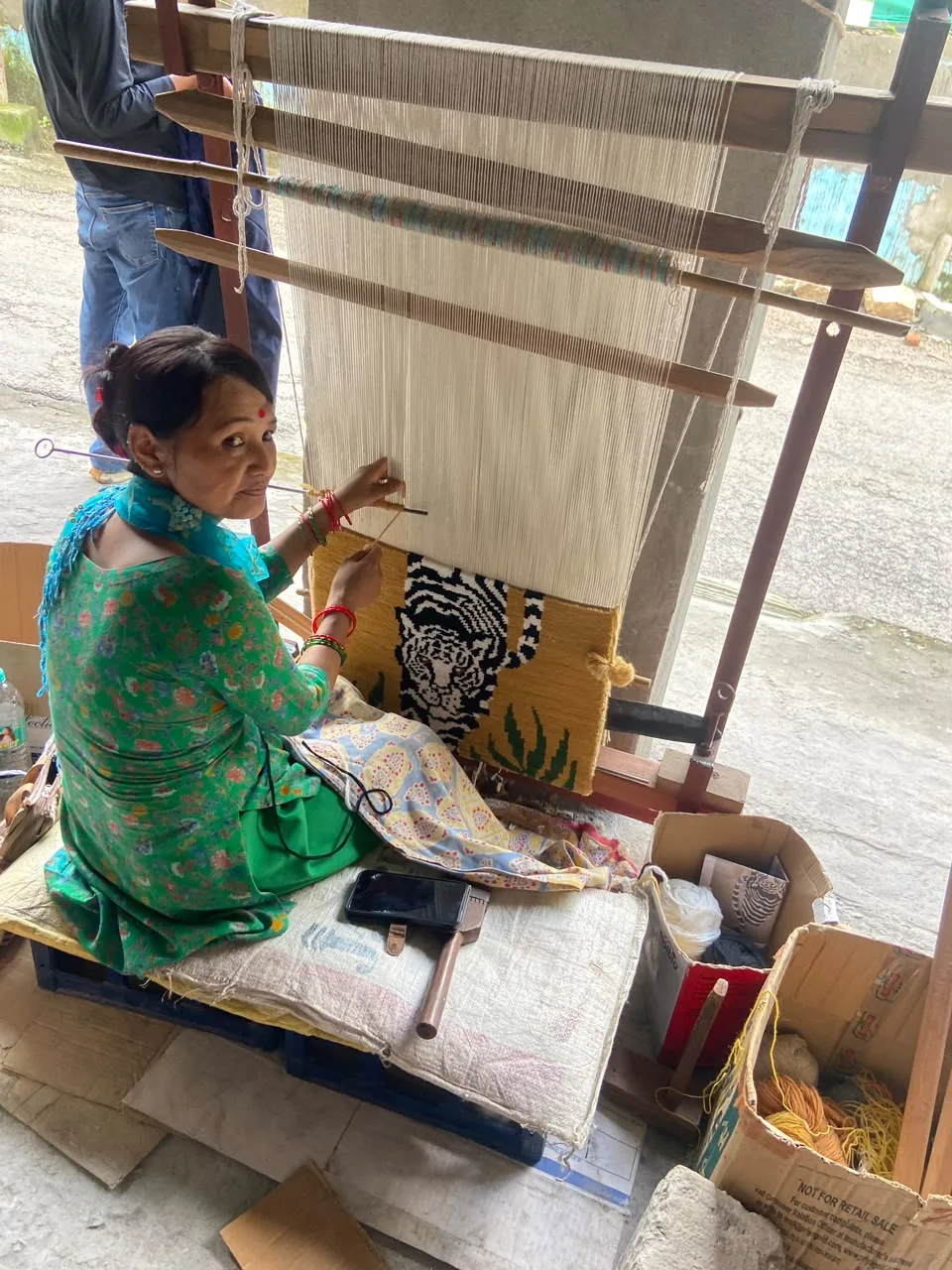
An artisan at the loom, a tiger design emerging from the warp

At the loom

One thread at a time

How a piece is made

From Pithoragarh, Uttarakhand

From our hands,to your home.

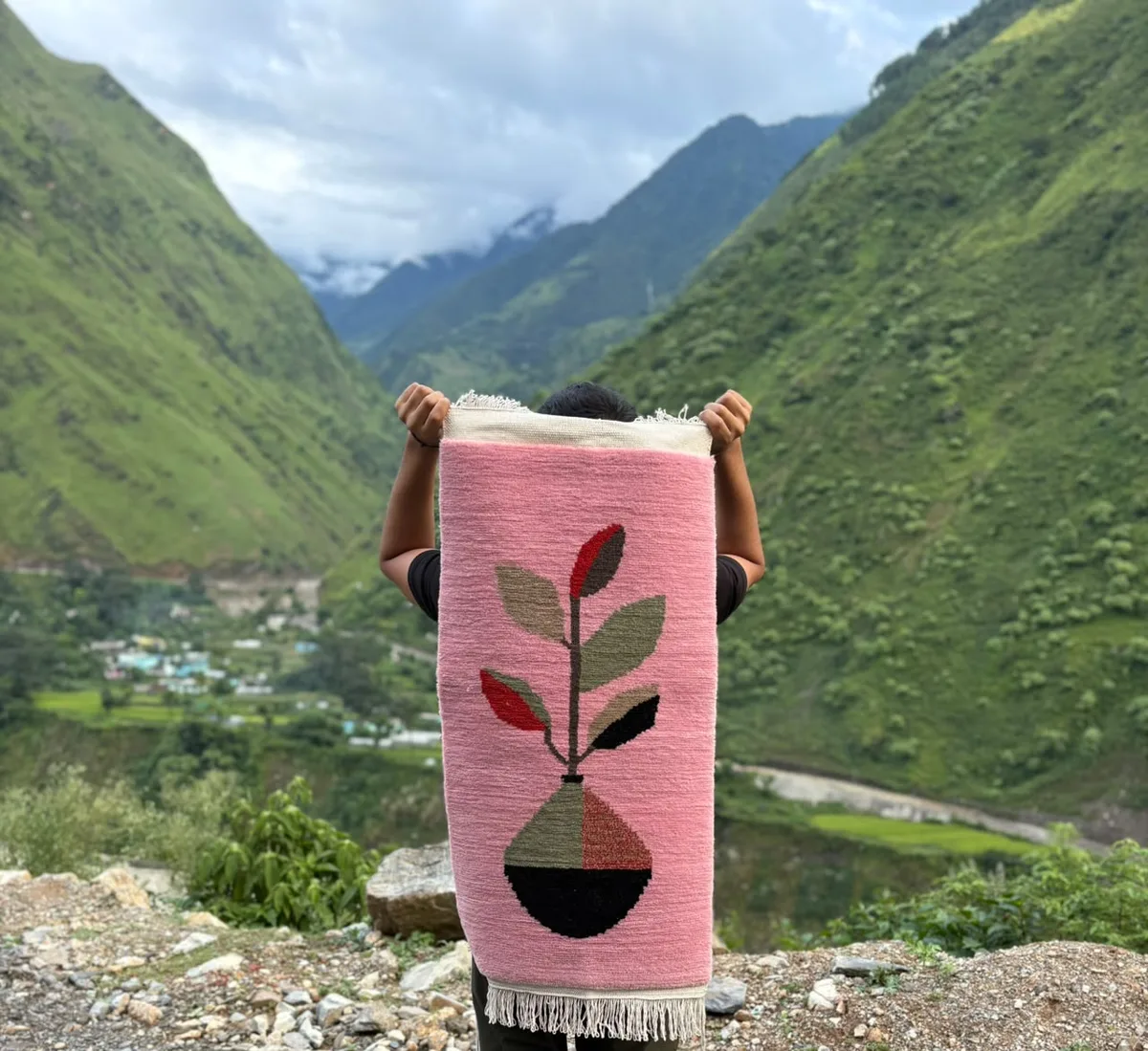
Rugs, hand-tufted wool and framed Aipan art. Made in the hills by a collective where every artisan is a shareholder.

Sanctioned by the Development Commissioner (Handicrafts), Ministry of Textiles, Government of India

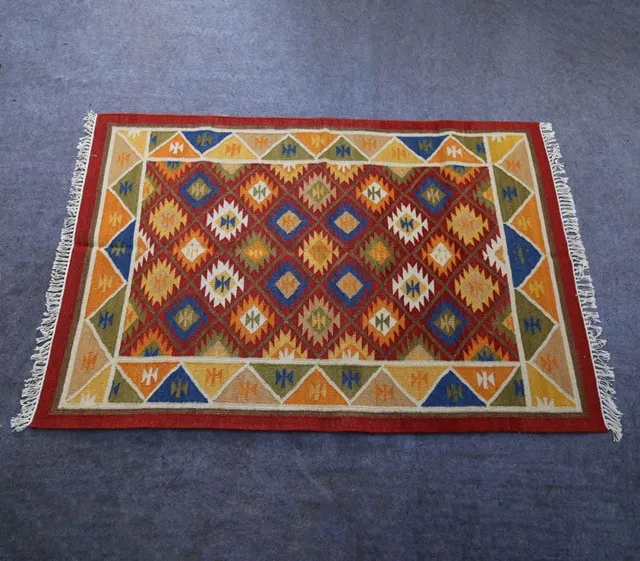
Other Carpet, Rugs and Durries
0+
Artisans on the rolls

Each one a member-owner

0+
Craftspersons in network

Across Pithoragarh district

0
Designs in the catalogue

Rugs, tufted pieces and framed art

0%
Community owned

No outside shareholder

The work

A few pieces to begin with

A selection across our collections. Open a piece for a closer look, then speak to the office about the details.

See every piece

Our story

Started in a courtyard, registered as a company.

A fair wage is good. A share of the company is better.

At the loom, one thread at a time.

For generations the women of our Scheduled Caste hamlets have spun wool through the winter and knotted it into blankets and floor coverings for their own homes. The skill was never in question. What was missing was price, paperwork and a buyer who did not take the larger half.

In 2025 we registered as a producer company so that the arithmetic would finally sit with the artisan. Raw wool, backing cloth and dyestuff are bought in bulk by the collective. Finished work is graded, priced and sold under one name. The surplus returns to the members as dividend, not to a middleman as margin.

We are recognised by the Development Commissioner (Handicrafts) under the Ministry of Textiles. That recognition opens Pehchan card registration, training grants and exhibition slots for members who would otherwise never see a government form.

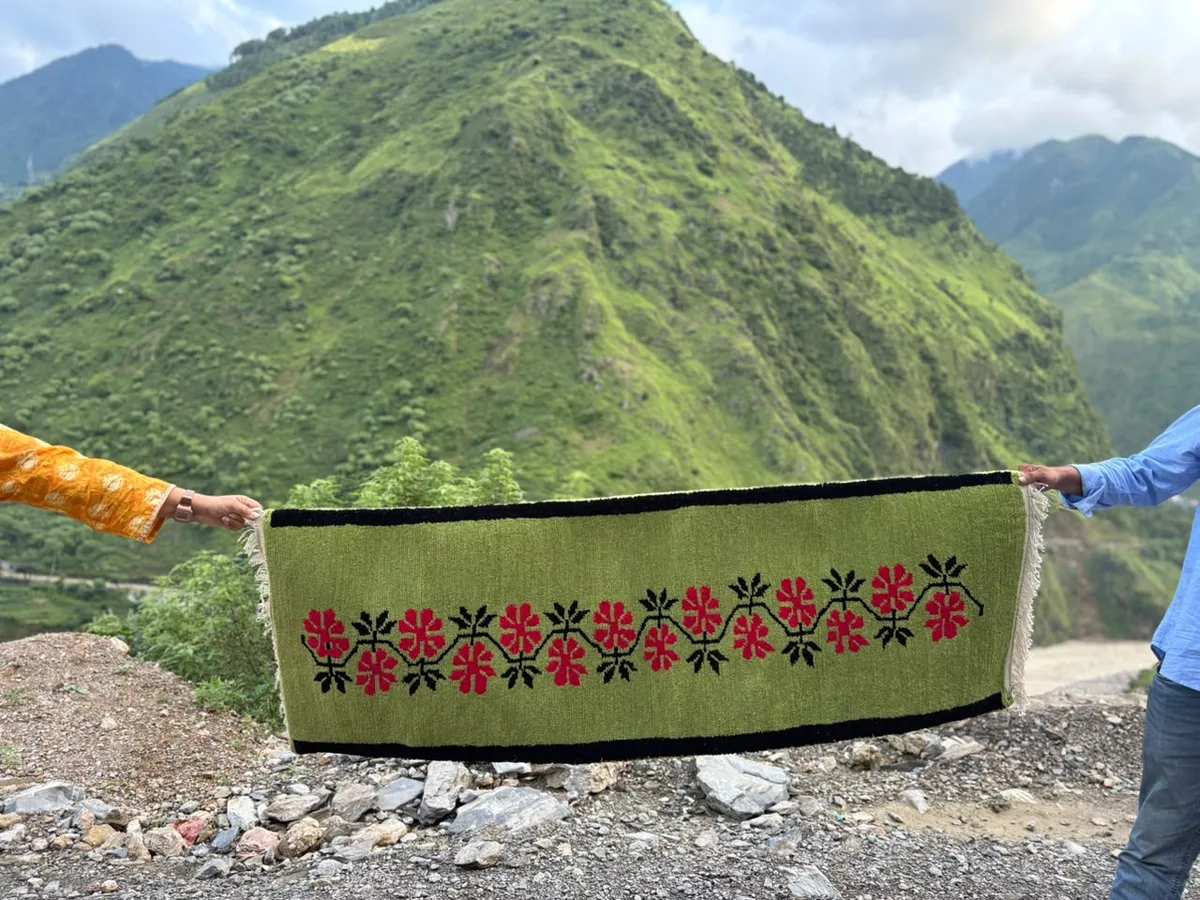
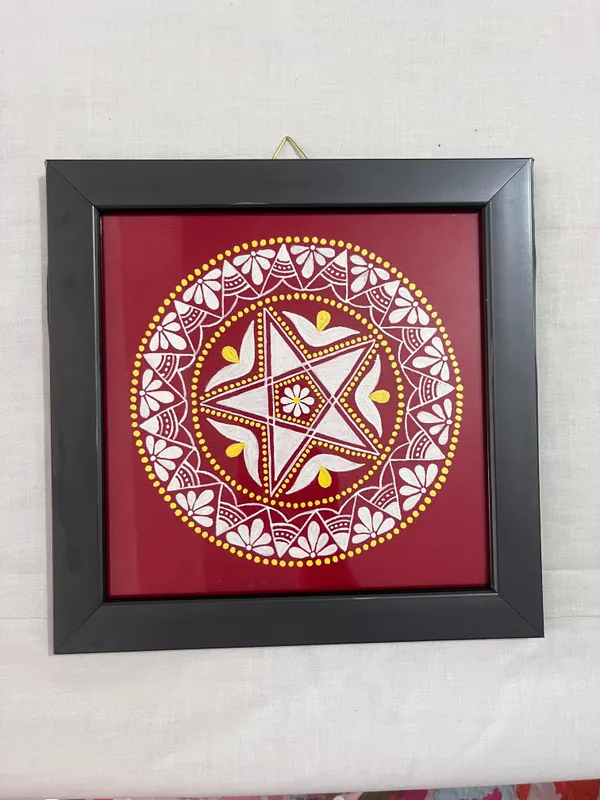
Aipan details, before the frame.

From the workshop, into the world.

How it is made

Our tufted pieces, in five steps

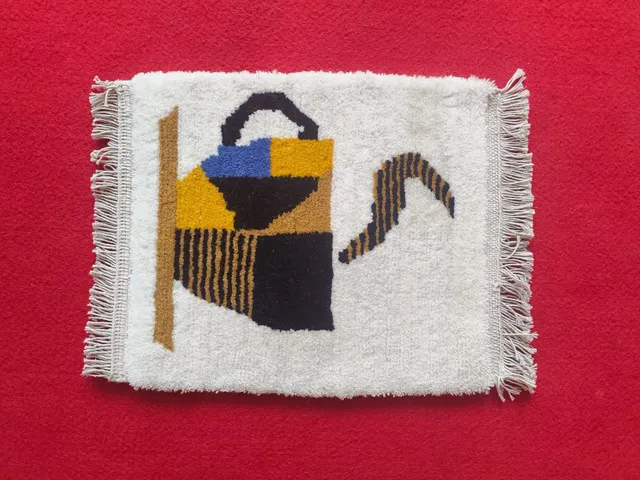
A closer look at our hand-tufted woollen collection: from preparing the yarn to binding the finished piece. The photographs show finished pieces from this collection.

  1. 01Step one

    Sorting the wool

    Fleece is graded by staple length and springiness, then washed and carded. What is too coarse for the pile is kept back for the backing.

  2. 02Step two

    Dyeing the yarn

    Yarn is dyed in small lots so a colourway can be matched later. Every shade in a piece is mixed before tufting starts — there is no correcting it afterwards.

  3. 03Step three

    Tufting the design

    The design is drawn on the backing cloth stretched over a frame, then punched in colour by colour. The maker works from the back and only sees the face when it comes off the frame.

  4. 04Step four

    Shearing and carving

    The pile is sheared level, then carved along every colour boundary so the shapes read crisply instead of bleeding into one another.

  5. 05Step five

    Binding and fringing

    Edges are bound, the fringe is knotted by hand, and the back is sized so the piece lies flat. Then it is graded, labelled with the maker's name and packed.

What we hold to

Four commitments we are measured against

01

Heritage, kept working

A technique survives by being practised, not archived. We document each craft and then make sure there is a paying order behind it next season.

02

Ownership, not patronage

Members hold shares, vote at the general body and see the books. Nobody here is a beneficiary of someone else's good intentions.

03

Materials from these hills

Himalayan sheep wool, carded and dyed in our own lots. Sourced as close to the workshop as the clip allows, so the money stays close.

04

A price that holds

Grading, honest labelling and a published rate card. An artisan should be able to predict next month's earning before starting the work.

Record

Where the company has been

Exhibitions, workshops and training programmes run since the company was registered — with the dates, venues and supporting departments as recorded at the time.

ExhibitionsSeptember 2025

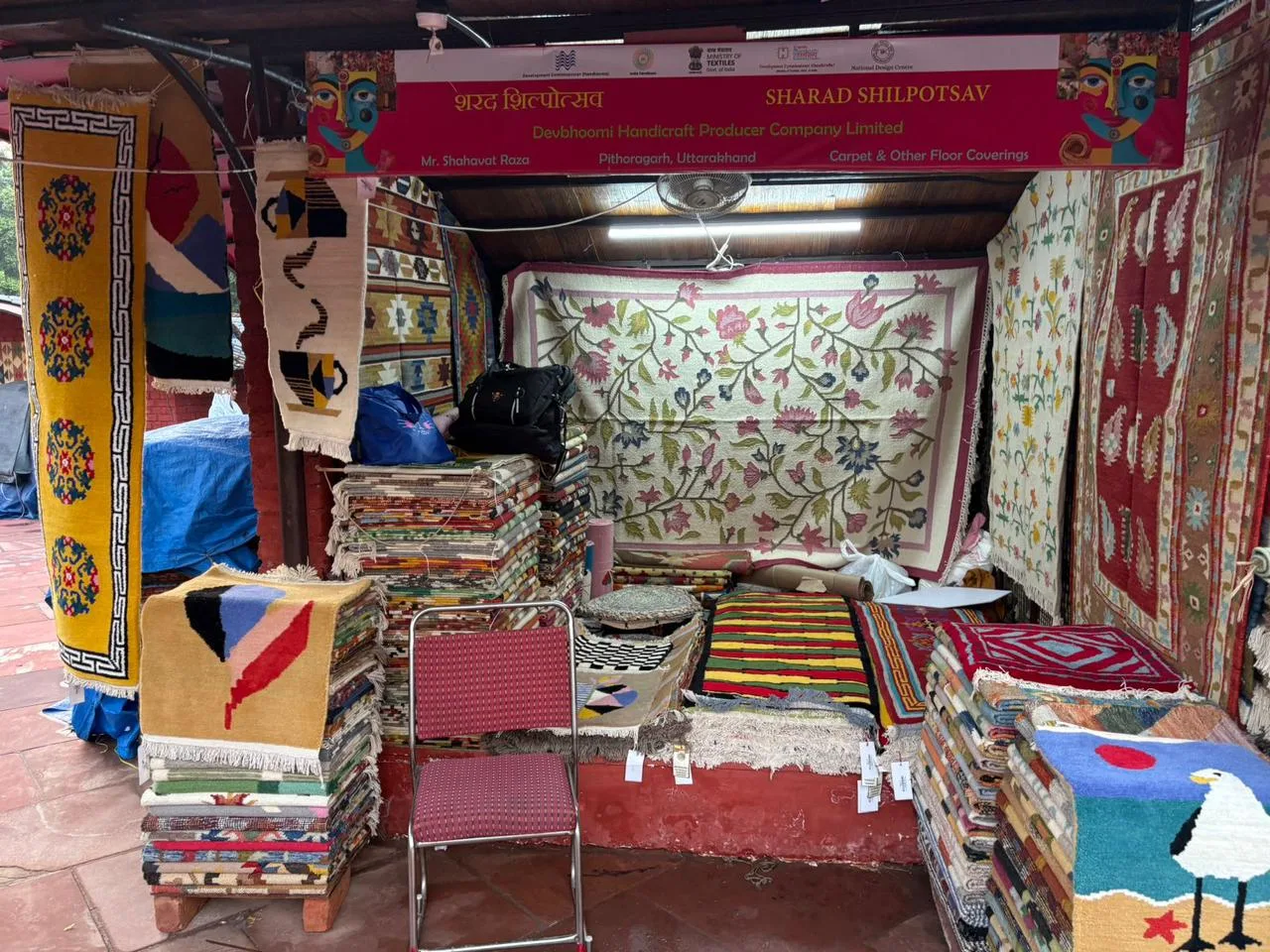
Sharad Shilpotsav at Dilli Haat

Dilli Haat, INA, New Delhi

The company showed its handcrafted carpets and floor coverings at Sharad Shilpotsav, Dilli Haat, New Delhi, organised by the Development Commissioner (Handicrafts), Ministry of Textiles. The stall carried only handmade, artisan-crafted work from Uttarakhand, and put our weavers in front of buyers and craft enthusiasts from across India and abroad.

  • Sharad Shilpotsav
  • Dilli Haat
  • Handmade carpets

WorkshopsJuly – August 2025

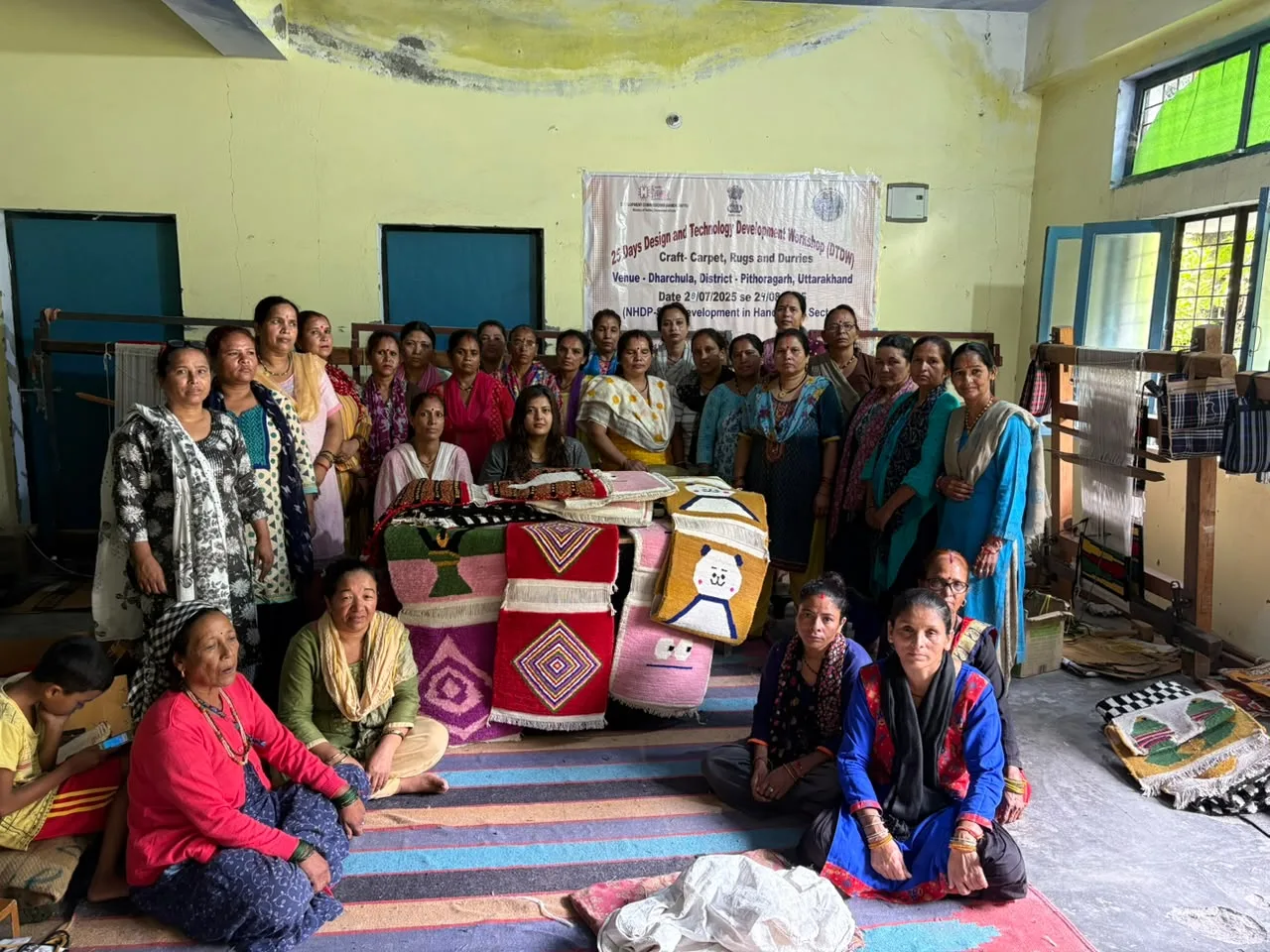
Design & Technology Development Workshop

Handicraft Service Centre, Almora

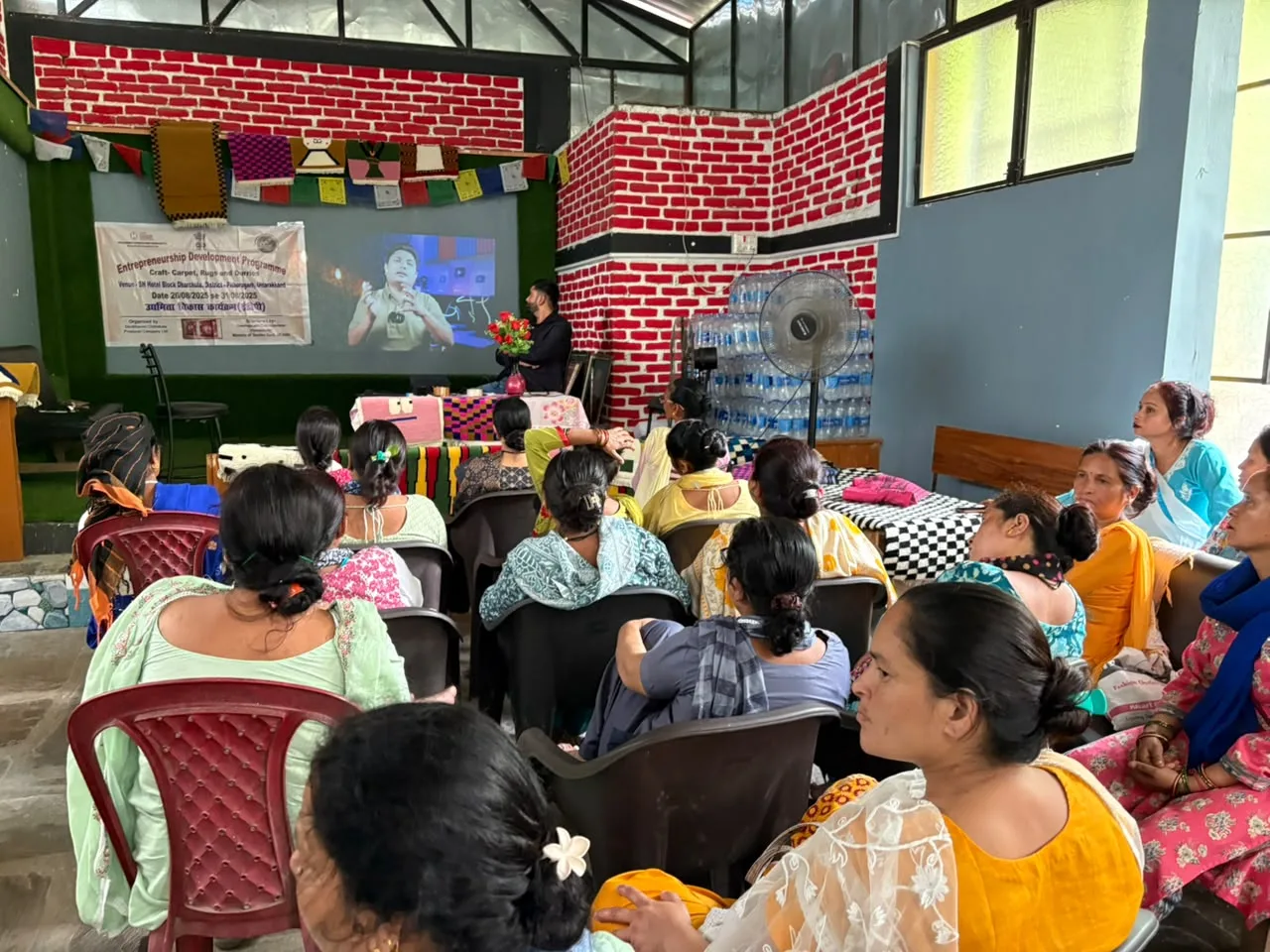
A four-week workshop run from 28 July to 24 August 2025 with the support of the Ministry of Textiles and the Development Commissioner (Handicrafts), led by designer Jageshwar Ahirwar. It focused on artisans working in carpet, rugs and durries: modern design intervention, new weaving methods and quality improvement, with practical demonstrations throughout. Participants came away with contemporary motifs and rug patterns of their own.

  • Design workshop
  • Carpet, rugs and durries
  • Skill development
See the full record→

What the collective does

Six functions, run for the members

A producer company is only useful if it does the work an individual artisan cannot do alone. These are those six things.

01

Bulk raw material

Wool, backing cloth, frames and dyestuff bought at collective volume and issued to members at cost.

Cost-price issue · Seasonal stocking · Quality-checked lots

02

Skill and design training

Residential and village-level courses with master craftspersons, plus design inputs so old technique meets current demand.

Master-led batches · Design workshops · Tool upgrades

03

Registration and documents

Pehchan card enrolment, artisan ID, bank linkage and scheme paperwork handled at the office so members do not lose days to it.

Pehchan cards · Bank linkage · Scheme access

04

Grading and quality

Every lot graded against a written standard before it carries our name, with the grade and the maker printed on the label.

Written standards · Maker on label · Batch traceability

05

Market and exhibitions

Government expo slots, retail tie-ups and a direct online channel, so a Didihat weaver can reach a Delhi buyer without three intermediaries.

Expo participation · Retail tie-ups · Direct online sale

06

Payment and dividend

Payment into the member's own account within a fixed window, and an annual dividend declared at the general body meeting.

Fixed payment window · Direct to account · Annual dividend

There is room for you in this.

Whether you hold a shuttle, a hammer or a purchase order — the collective grows by one member, one buyer and one order at a time.